The Boy
The Giving TreeThe Boy is the human center of a story about affection changing shape as childhood gives way to age. He loves the tree and returns to her over time, but what he seeks from her shifts: first the means to buy things and have fun, then material provisions for adult life, and finally a place to sit and rest. The tree answers those changing needs by surrendering her apples, branches, and trunk, until the aged Boy returns to a tree that describes herself as no more than an old stump.
Identity and Early Relationship
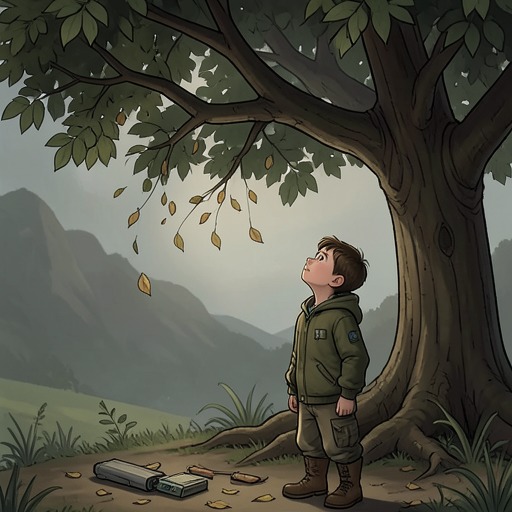
The story introduces The Boy as a little boy loved by the tree; the feeling is mutual, and he loves her very much. He comes to her regularly, and their early bond is associated with the tree’s invitation to climb, swing from her branches, eat apples, play in her shade, and be happy. This beginning establishes a relationship rooted in companionship and shared pleasure, before the encounters become organized around what The Boy needs from the tree.
The tree’s invitation also gives the early relationship a distinct form: happiness is attached to being with her, and to activities made possible by her living body. Later, The Boy’s visits continue, but the play of childhood gives way to requests for things he can use elsewhere. That contrast makes his changing priorities visible through the objects he asks for and the portions of the tree he accepts.
Growing Older and Asking for Money
Time passes, The Boy grows older, and the tree is often alone. When he next comes, she invites him to climb and play as before, but he says he is too big for those activities. Instead, he wants to buy things and have fun, and asks for money. The encounter marks a change in both his life stage and his relationship with the tree: the old shared games no longer meet his stated needs.
The tree says that she has no money and possesses only leaves and apples. Rather than ending the exchange at what she cannot provide, she offers a way for him to obtain money: he can gather her apples and sell them in the city. The Boy climbs the tree, gathers her apples, and carries them away. His request is thus answered through a resource taken from the tree, while the proposed benefit lies beyond their play together: the apples are to be sold so he can have money and be happy.
Requests, Gifts, and the Tree’s Losses
The next needs shown in the available episodes are a house and a boat. When The Boy asks for a house, the tree explains that she has no house of her own beyond the forest, but permits him to cut off her branches and build one. She presents this sacrifice as a means for him to be happy. The episode extends the earlier pattern: when she cannot give the requested finished object, she makes her own material available for him to turn into it.
Later, the tree herself proposes that he cut down her trunk and make a boat, so he can sail away and be happy. The terms of the gift have now reached beyond fruit and branches to the trunk itself. Taken together, the episodes trace a material sequence: apples can be gathered and carried away, branches can be cut off for a house, and the trunk can be cut down for a boat. The story pairs The Boy’s requests with the tree’s willingness to give, while showing the increasing cost to the giver in what remains of her.
Returns and Changing Needs
The Boy’s visits are separated by time, and the tree’s welcome persists across them. After a long absence, he comes back and the tree is so happy that she can hardly speak; she whispers an invitation to come and play. This reunion sets her continuing desire for companionship against the changing purpose of his return. The story records her happiness at seeing him, but the later episodes show that what he comes to ask for is not simply the play she remembers.
After another long interval, The Boy comes back again. By then, the tree says that her apples are gone and her branches are gone; she also has no trunk left to offer. The Boy says that his teeth are too weak for apples, a concrete sign that he too has changed with age. The former gifts and activities are no longer available or suitable: there are no apples to eat, no branches on which to swing, and the tree describes herself as an old stump.
The Final Return and the Tree’s Remaining Gift
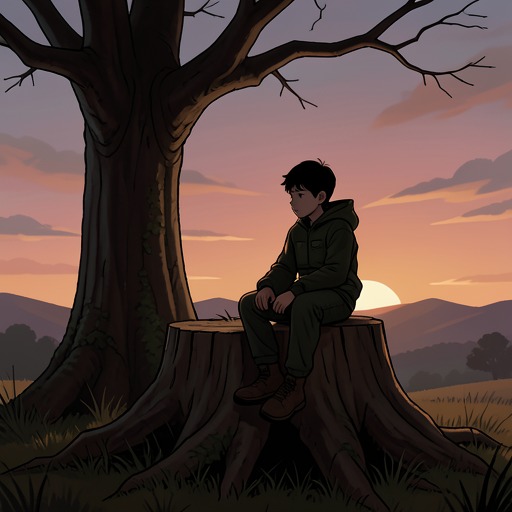
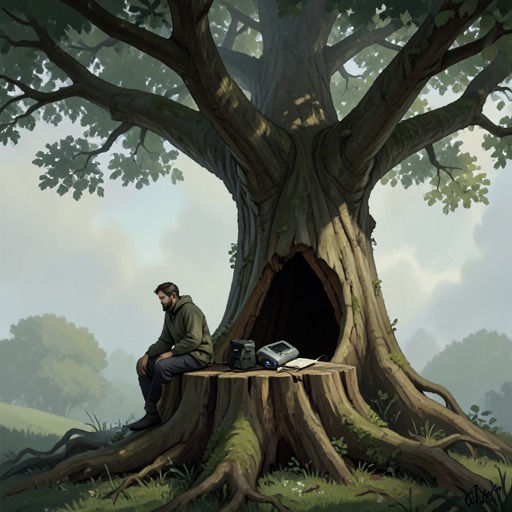
At this last stage, The Boy says he does not need very much: he wants only a quiet place to sit and rest because he is very tired. His request differs from his earlier aims. Money, a house, and a boat called for resources to obtain or make things; now he asks for a place and rest. The tree, who has said she has nothing left to give, straightens herself up as much as she can in response. Her remaining form is enough for the modest need he expresses.
The ending brings the changing lives of The Boy and the tree into a spare, physical relation: the aged visitor is tired, and the depleted tree is an old stump that can still serve as a place to sit. Across their repeated encounters, his needs narrow from acquiring and making things to resting, while her capacity to give diminishes from apples and branches to trunk and stump. The relationship’s final image therefore holds both continuity and loss: The Boy returns to the tree, but the childhood setting of climbing and play has become a place of rest, and the tree’s last usefulness is inseparable from all she has surrendered.